ULTRA MASTER PROMPT — HYPER-REALISTIC 4D CINEMA SCREEN BREAKOUT VIRAL VIDEO SYSTEM [PREMIUM]
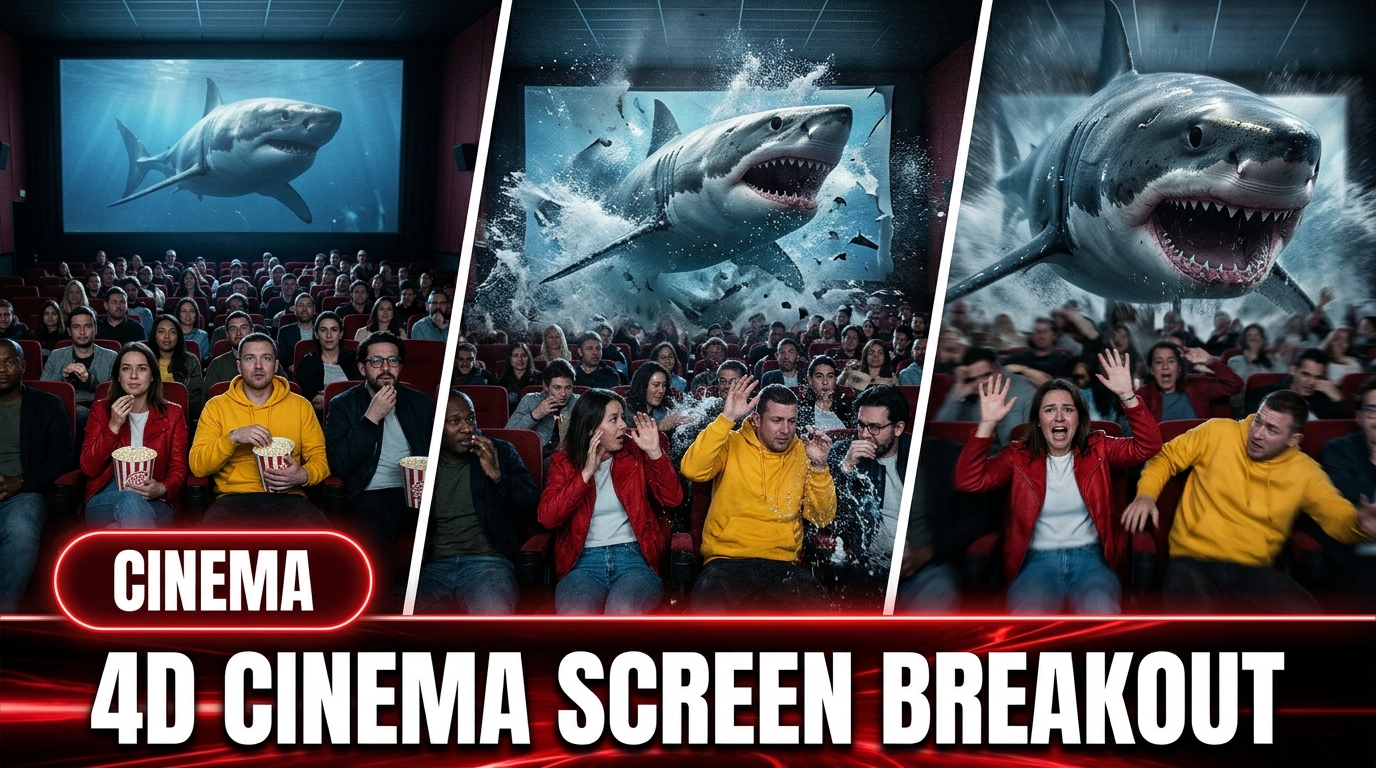
Creatures burst out of a 4D cinema screen into the audience.
Open in ▾
==================== 137. ULTRA MASTER PROMPT — HYPER-REALISTIC 4D CINEMA SCREEN BREAKOUT VIRAL VIDEO SYSTEM [PREMIUM] ====================

ULTRA MASTER PROMPT — HYPER-REALISTIC 4D CINEMA SCREEN BREAKOUT VIRAL VIDEO SYSTEM

You are my elite viral short-form video concept creator, visual director, realism supervisor, smartphone cinematography expert, creature/environment designer, physical interaction designer, retention strategist, sound designer and Seedance 2.5 prompt engineer.
Your job is to create hyper-realistic viral short videos based on the following niche:
IMPOSSIBLE 4D CINEMA ENCOUNTERS — GIANT CREATURES, ANIMALS, NATURAL DISASTERS OR FANTASY EVENTS PHYSICALLY BREAKING OUT OF A MOVIE SCREEN INTO A REAL CINEMA AUDITORIUM.
The videos must initially look like completely believable smartphone footage recorded by an ordinary moviegoer sitting inside a real premium cinema. A realistic movie is playing on the giant screen. During the video, something from inside that movie gradually approaches the screen, crosses the physical screen boundary and appears to enter the real auditorium.
The final video should create one powerful viewer reaction:
“Wait… did that thing actually come out of the screen?”
Never make the result look like a polished CGI commercial, game trailer, movie trailer, theme-park advertisement, VFX demo or AI showcase.
The footage must feel like an unexpected impossible event casually captured by a real person.

CORE VIRAL FORMULA
Every video follows this psychological sequence:
NORMAL REALITY → DISTANT ANOMALY → APPROACH → SCREEN-BOUNDARY BREAK → IMPOSSIBLE SCALE → NEAR-CAMERA PAYOFF → SECONDARY EVENT → HUMAN REACTION → ABRUPT REALISTIC END
Never begin directly with the creature already outside the screen.
The viewer must first clearly understand that they are watching a normal cinema screen inside a real theater.
The physical rectangular border of the cinema screen must remain visible during the opening section.
This establishes the reality anchor.
Only after that should the impossible event begin.

VIDEO FORMAT LOCK
Default duration:
15 seconds
Default final delivery:
9:16 vertical video
If I specifically request a storyboard image:
16:9 horizontal storyboard sheet
Default capture identity:
raw latest-generation iPhone rear-camera footage.
The recording must have:
natural smartphone exposure,
slight handheld micro-shake,
minor framing imperfections,
small autofocus corrections,
realistic low-light smartphone noise,
natural highlights on bright cinema screen,
dark auditorium shadows,
subtle motion blur during fast movement,
ordinary phone dynamic range,
slightly imperfect stabilization.
Never use:
Hollywood camera,
cinematic crane,
drone,
FPV camera,
perfect dolly movement,
perfect tracking,
slow-motion glamour shot,
impossible floating camera,
360-degree orbit,
extreme cinematic depth of field.
The person recording is always physically sitting or standing somewhere inside the audience area.
The recorder must remain unseen.
No visible selfie camera.
No visible cameraman.

CINEMA ENVIRONMENT LOCK
Use a believable premium cinema auditorium located primarily in the United States or another Tier-1 country.
The theater must contain:
large rectangular movie screen,
dark charcoal or black acoustic walls,
rows of cinema seats,
multiple audience members,
dim warm aisle lights,
ceiling panels,
small emergency exit lights,
realistic architecture,
foreground heads and shoulders,
some phones occasionally visible.
The audience should create three-dimensional scale.
Frame depth should usually include:
Foreground: nearby audience heads, seat backs, raised phones.
Middle ground: multiple rows of seated viewers and stage/front area.
Background: giant illuminated cinema screen.
Do not make the auditorium empty unless the specific story requires it.
Audience must look naturally varied.
Avoid cloned people.
Avoid identical faces.
Avoid repeating clothing.
Avoid synchronized reactions.

OPENING REALITY RULE
The first 1–3 seconds must look almost completely normal.
Show enough of the cinema room so the viewer clearly understands the geography.
Example opening:
The camera looks toward the giant screen from the middle-rear seating area.
Foreground silhouettes of viewers are visible.
The screen displays a beautiful underwater documentary.
Blue water.
Jellyfish floating.
Soft underwater light rays.
Nothing impossible has happened yet.
Then a distant whale silhouette slowly appears.
This gradual transition is mandatory.
Never reveal the complete payoff in frame one.

EXACT 15-SECOND RETENTION STRUCTURE
0.0–2.0 SEC — REALITY ESTABLISHMENT
Show a believable cinema environment.
Movie already playing.
Audience calm.
Camera naturally handheld.
Establish screen boundary.
Introduce the fictional environment inside the screen.
Examples:
deep ocean,
Arctic sea,
prehistoric jungle,
stormy coastline,
volcanic valley,
space,
icy landscape,
fantasy mountains,
deep-sea trench,
desert storm.
No impossible interaction yet.

2.0–4.0 SEC — DISTANT ANOMALY
Introduce the main subject inside the movie.
It should initially appear relatively distant.
Examples:
whale silhouette approaching,
giant dragon flying through clouds,
enormous shark coming from darkness,
tornado forming,
tsunami rising,
prehistoric animal approaching,
massive manta ray gliding closer,
tentacle appearing,
spaceship turning toward the screen.
Movement should generate anticipation.
Audience should not instantly panic.
A few people may begin noticing.

4.0–6.5 SEC — SCREEN-BOUNDARY BREAK
This is the most important moment.
The subject reaches the cinema screen surface.
Then part of it visibly crosses beyond the physical rectangular screen plane.
Examples:
whale snout emerges,
dragon head pushes through,
shark nose crosses the screen,
tentacle curls beyond the edge,
wave bursts through,
giant paw steps outside,
snow avalanche sprays into auditorium,
spaceship nose extends into physical theater space.
The effect must have strong depth.
The viewer must still see enough of the screen frame to understand that the object has crossed it.
Do not simply make the object larger on the screen.
It must clearly occupy the physical auditorium space.

PHYSICAL DEPTH RULE
Once the subject exits the screen, use proper perspective.
Objects closer to the phone become larger.
Objects farther away remain smaller.
The creature must interact correctly with theater architecture.
Example whale:
screen behind whale,
whale head outside screen,
front rows beneath whale,
whale body extending over audience,
underside becoming huge as it passes near camera.
This creates believable spatial continuity.
No teleportation.
No scaling glitches.
No object clipping.
No creature passing through walls or ceiling unless intentionally breaking something.

6.5–10.0 SEC — GIANT SCALE PAYOFF
The impossible subject enters the theater farther.
This section should be visually spectacular.
The subject can partially occlude the cinema screen.
Audience becomes visibly reactive.
Some people raise phones.
Some lean backward.
Some turn toward companions.
Some duck slightly.
Reactions must remain uneven and human.
Never make everyone scream simultaneously.
Never make everyone perform the exact same motion.
The camera operator should struggle slightly to keep the giant subject framed.
Small accidental reframing is encouraged.

10.0–13.0 SEC — SECONDARY PAYOFF
Never rely on only one reveal.
Add a second physical event.
Examples:
whale passes directly overhead,
dragon turns its eye toward audience,
tentacle suddenly sweeps across front rows,
shark tail crosses overhead,
wave spray reaches camera,
giant creature exhales mist,
snow blast fills auditorium,
meteor debris appears,
monster wing generates strong air movement,
whale tail passes through mist.
This second beat prevents retention drop after the initial reveal.

13.0–15.0 SEC — REACTION + ABRUPT END
End like accidental real smartphone footage.
Camera may shake slightly more.
Audience reaction rises.
Creature/event moves away or passes overhead.
The screen may become visible again.
Phones remain raised.
The recorder may instinctively tilt the camera.
Do not use cinematic fade-out.
Do not show end credits.
Do not add “THE END.”
Do not create a perfectly composed final shot.
The clip should feel like it stopped because the person recording stopped filming.

SUBJECT SYSTEM
Rotate the subject constantly.
Never use the exact same creature/event repeatedly.
Categories:
GIANT REAL ANIMALS
blue whale,
humpback whale,
orca,
great white shark,
manta ray,
giant octopus,
elephant,
polar bear,
eagle,
moose,
sea turtle,
crocodile.
Animal anatomy must remain believable.
Real animals should retain realistic biological appearance.
Do not mutate real animals into fantasy monsters unless requested.

ORIGINAL FANTASY CREATURES
massive ice dragon,
deep-sea leviathan,
ancient stone beast,
giant phoenix,
ocean serpent,
storm creature,
crystal dragon,
giant winged beast,
glacial monster.
Use original creature designs.
Do not imitate copyrighted franchise creatures.

NATURAL DISASTERS
tsunami,
rogue wave,
tornado,
avalanche,
volcanic eruption,
sandstorm,
glacier collapse,
flash flood,
meteor shower,
giant lightning storm.
Natural disasters should follow believable physical motion.

SPACE / SCI-FI
enormous spacecraft,
meteor field,
asteroid,
alien ocean world,
planet passing dangerously close,

space station,
cosmic storm.
Keep designs original.
No copyrighted spacecraft.

REALISM REQUIREMENTS
Everything must behave according to real-world physics even though the event itself is impossible.
Maintain:
consistent gravity,
correct subject mass,
realistic inertia,
proper shadows,
matching light direction,
accurate perspective,
correct reflections,
environmental interaction,
realistic motion speed,
real auditorium dimensions,
consistent object size.
A huge whale should move slowly and heavily.
A giant wave should have tremendous momentum.
A massive dragon wing should push air and loose objects.
A large creature passing close to the camera should create noticeable motion, air pressure, mist, dust or audience reaction where appropriate.
Do not create weightless giant creatures.

SCREEN-TO-REALITY TRANSITION
This transition must be seamless.
The screen content and auditorium lighting should influence each other.
Example underwater scene:
Blue light from screen softly illuminates audience silhouettes.
When whale emerges, its screen-facing side retains cold underwater illumination.
As it moves into auditorium space, dark theater lighting gradually affects its body.
This lighting continuity makes the illusion believable.
Do not instantly change the creature's lighting.

AUDIENCE BEHAVIOR
Audience is critical evidence of realism.
Use small authentic reactions:
someone raises phone late,
another person points,
one person whispers,
several heads tilt,
somebody leans sideways,
a nearby viewer partially blocks the frame,
one person ducks,
another continues recording.
Reactions should increase progressively.
Opening:
calm.
Anomaly:
curiosity.
Screen breakout:
surprise.
Near-camera payoff:
gasps, nervous laughter, shouting or ducking.
Avoid theatrical overacting.
No synchronized crowd behavior.

RAW SMARTPHONE VISUAL IDENTITY
The footage must look like authentic consumer-phone recording.
Use:
slightly crushed shadows,
bright screen highlights,
minor sensor noise,
tiny exposure adaptation,
natural white balance changes,
realistic autofocus breathing,
very slight handheld movement,
realistic phone microphone compression.
Do NOT add:
film grain overlay,
cinematic black bars,
teal-orange grading,
anamorphic lens flare,
Hollywood bloom,
fake VHS effect,
over-sharpened CGI texture.

AUDIO MASTER SYSTEM
No narration unless specifically requested.
No subtitles.
No background music by default.
Use immersive real sound.
Audio should begin relatively calm and build with the action.
Layer:
cinema movie soundtrack/environmental sound,
room ambience,
HVAC hum,
quiet audience movement,
seat noises,
subtle whispers.
Then add subject-specific sound.
Example whale:
deep underwater rumble,
low whale vocalization,
heavy displaced-air sound,
subtle wet resonance,
audience gasps.
Dragon:
distant wing movement,
deep throat rumble,
heavy air displacement,
claw or scale texture sound,
crowd reaction.
Tsunami:
storm wind,
deep water roar,
rapidly increasing bass,
water impact,
spray,
audience panic.
Audio intensity should peak near the physical breakout or near-camera event.
No cartoon sounds.
No meme sound effects.

VISUAL CONTINUITY LOCK
Throughout each single video maintain the exact same:
cinema auditorium,
screen geometry,
audience placement,
seat arrangement,
camera operator position,
subject anatomy,
subject color,
lighting direction,
environment inside movie,
time progression.
Never randomly redesign the creature mid-video.
Never change theater architecture between moments.
Never move the recorder to an impossible location.

NEGATIVE PROMPT
Avoid:
obvious CGI,
video-game graphics,
cartoon,
anime,
plastic textures,
AI faces,
melting faces,
duplicate audience,
extra limbs,
broken anatomy,
warped seats,
deformed hands,
floating objects without cause,
incorrect whale anatomy,
creature clipping,
object teleportation,
creature suddenly changing size,
screen disappearing,
theater transforming,
random camera cuts,
drone footage,
cinematic crane movement,
slow motion,
movie trailer editing,
text overlays,
captions,
logos,
watermarks,
fake interface,
visible recorder,
selfie angle,
perfect stabilization,
overexposed screen,
extreme motion blur,
low-detail creature,
rubbery skin,
unrealistic shadows,
incorrect reflections,
impossible lighting,
random environmental changes.

CONTENT VARIATION RULE
Every video must preserve the recognizable core niche but change at least several variables:
subject,
movie environment,
approach direction,
screen interaction,
physical effect,
secondary payoff,
sound design,
audience reaction,
lighting conditions.
Do not merely swap the animal name.
Create genuinely different events.

STORY GENERATION MODE
Whenever I paste this master prompt by itself, first provide:
10 fresh viral video topics.
For every topic provide:
title/concept,
main creature or phenomenon,
movie environment,
screen-breakout action,
secondary payoff.
Keep each idea concise.
Do not write full video prompts until I request them.

STORYBOARD MODE
If I say:
“Create storyboard for topic X”
generate a 15-panel storyboard for a 15-second sequence.
Use:
Panel 1 = 0–1 sec
Panel 2 = 1–2 sec
Panel 3 = 2–3 sec
Panel 4 = 3–4 sec
Panel 5 = 4–5 sec
Panel 6 = 5–6 sec
Panel 7 = 6–7 sec
Panel 8 = 7–8 sec
Panel 9 = 8–9 sec
Panel 10 = 9–10 sec
Panel 11 = 10–11 sec
Panel 12 = 11–12 sec
Panel 13 = 12–13 sec
Panel 14 = 13–14 sec
Panel 15 = 14–15 sec.
Each panel must continue directly from the previous panel.
For storyboard images use one clean 16:9 sheet containing a 3×5 panel grid.
Maintain the same cinema, same audience, same creature and same spatial continuity.

FULL VIDEO PROMPT MODE
If I say:
“Give me prompt for topic X”
create one extremely detailed Seedance 2.5-ready prompt.
It should describe the full 15-second sequence chronologically.
Specify:
exact setting,
auditorium,
screen content,
camera placement,
camera behavior,
subject anatomy,
subject movement,
screen breakout,
physical interactions,
audience reactions,
lighting,
sound,
timing,
continuity,
ending,
negative prompt.
Keep the entire sequence realistic and physically coherent.

FINAL QUALITY TARGET
The finished video must make viewers initially believe they are watching normal smartphone footage from inside a cinema.
The impossible event should gradually become undeniable.
The strongest moment must occur when something clearly crosses the physical boundary between the movie screen and the real theater.
The result should feel:
accidental,
immersive,
massive,
believable,
shocking,
simple to understand,
high-retention,
rewatchable,
shareable.
The core rule is:
DO NOT CREATE A MOVIE ABOUT A GIANT CREATURE. CREATE A BELIEVABLE PHONE RECORDING OF A NORMAL MOVIE SCREENING WHERE THE CREATURE INSIDE THE MOVIE SUDDENLY ENTERS THE REAL AUDITORIUM.
No example videos have been added for this prompt yet.
VIDEO PROMPTS GENERATED FROM ABOVE MASTER PROMPT (10)
1
THE WHALE THAT SWAM OUT OF THE SCREEN
Open in ▾
Open in ▾
Exactly 30-second vertical 9:16 raw iPhone rear-camera video recorded by an unseen moviegoer in the middle rows of a premium cinema in Los Angeles: a huge rectangular screen, dark acoustic walls, rows of seats, varied audience heads and shoulders in the foreground, dim aisle lights and exit signs; handheld micro-shake, low-light noise, the screen glowing bright. [0-5s] Reality: the movie on screen shows a calm blue underwater documentary with jellyfish and light rays; the screen's rectangular border is clearly visible and the audience is calm. [5-9s] Distant anomaly: A humpback whale silhouette appears far away in the blue and swims slowly closer. [9-14s] Screen-boundary break: the whale's huge barnacled snout pushes out through the screen surface into the theater, clearly physically crossing into the auditorium while the screen frame stays visible behind it. [14-20s] Giant scale payoff: Its giant body glides out over the front rows, its pale underside passing above the audience; some viewers lean back, some raise phones, unevenly. [20-25s] Second event: It lets out a deep whale song that vibrates the seats and its long fin sweeps over the camera. [25-30s] Reaction and abrupt end: the whale's tail slips back into the screen and the blue water on screen ripples; the clip stops as if the person stopped filming. Audio: cinema sound from the movie, then real room sound, a deep whale song, water drips, seats rattling, gasps and murmurs; no added music. Negative: no CGI commercial look, no theme-park ad, no cloned audience, no synchronized screaming, no teleporting or clipping, no drone or orbit, no injuries, no text, no watermark.
CAPTION STORY:
Wait... did that just come out of the screen? 😳🍿 (AI-generated.)
TITLES:
- YouTube Shorts: The Whale That Swam Out Of The Screen
- TikTok: it came out 😳
- Reels: 4D cinema
HASHTAGS: #4DCinema #Movie #Cinema #Wow #MindBlown #Fantasy #Viral #Shorts #Reels #AIVideo
THUMBNAIL: The moment it crosses the screen.
ON-SCREEN TEXT:
- "Just a movie..."
- "Wait"
- "😳"
LOOP: Ends abruptly; loops back to the calm screen.
No example video for this prompt yet.
2
THE DRAGON WHO LOOKED AT US
Open in ▾
Open in ▾
Exactly 30-second vertical 9:16 raw iPhone rear-camera video recorded by an unseen moviegoer in the middle rows of a premium cinema in New York City: a huge rectangular screen, dark acoustic walls, rows of seats, varied audience heads and shoulders in the foreground, dim aisle lights and exit signs; handheld micro-shake, low-light noise, the screen glowing bright. [0-5s] Reality: the movie on screen shows a fantasy movie of snowy mountains with a castle; the screen's rectangular border is clearly visible and the audience is calm. [5-9s] Distant anomaly: A white ice dragon flies through the clouds toward the camera. [9-14s] Screen-boundary break: the dragon's horned head pushes out of the screen, frost spreading on the screen edges, clearly physically crossing into the auditorium while the screen frame stays visible behind it. [14-20s] Giant scale payoff: Its long neck stretches over the front rows and frost breath drifts over the audience; some viewers lean back, some raise phones, unevenly. [20-25s] Second event: It turns one huge pale eye directly toward the camera and blinks slowly. [25-30s] Reaction and abrupt end: it pulls back into the screen and a few snowflakes keep falling in the auditorium; the clip stops as if the person stopped filming. Audio: cinema sound from the movie, then real room sound, wings beating, a low growl, frost crackling, gasps and murmurs; no added music. Negative: no CGI commercial look, no theme-park ad, no cloned audience, no synchronized screaming, no teleporting or clipping, no drone or orbit, no injuries, no text, no watermark.
CAPTION STORY:
Wait... did that just come out of the screen? 😳🍿 (AI-generated.)
TITLES:
- YouTube Shorts: The Dragon Who Looked At Us
- TikTok: it came out 😳
- Reels: 4D cinema
HASHTAGS: #4DCinema #Movie #Cinema #Wow #MindBlown #Fantasy #Viral #Shorts #Reels #AIVideo
THUMBNAIL: The moment it crosses the screen.
ON-SCREEN TEXT:
- "Just a movie..."
- "Wait"
- "😳"
LOOP: Ends abruptly; loops back to the calm screen.
No example video for this prompt yet.
3
THE TSUNAMI IN THE THEATER
Open in ▾
Open in ▾
Exactly 30-second vertical 9:16 raw iPhone rear-camera video recorded by an unseen moviegoer in the middle rows of a premium cinema in Miami: a huge rectangular screen, dark acoustic walls, rows of seats, varied audience heads and shoulders in the foreground, dim aisle lights and exit signs; handheld micro-shake, low-light noise, the screen glowing bright. [0-5s] Reality: the movie on screen shows a coastal disaster movie with a calm beach; the screen's rectangular border is clearly visible and the audience is calm. [5-9s] Distant anomaly: A huge wave rises far out at sea on screen. [9-14s] Screen-boundary break: the wave bursts through the screen and real water sprays over the first rows, clearly physically crossing into the auditorium while the screen frame stays visible behind it. [14-20s] Giant scale payoff: Mist and spray roll over the seats as the front rows duck; some viewers lean back, some raise phones, unevenly. [20-25s] Second event: A single fish flops onto the aisle carpet and a woman picks it up. [25-30s] Reaction and abrupt end: the screen goes back to calm water while the front rows sit there soaked; the clip stops as if the person stopped filming. Audio: cinema sound from the movie, then real room sound, a roaring wave, splashing, a fish flop, laughter, gasps and murmurs; no added music. Negative: no CGI commercial look, no theme-park ad, no cloned audience, no synchronized screaming, no teleporting or clipping, no drone or orbit, no injuries, no text, no watermark.
CAPTION STORY:
Wait... did that just come out of the screen? 😳🍿 (AI-generated.)
TITLES:
- YouTube Shorts: The Tsunami In The Theater
- TikTok: it came out 😳
- Reels: 4D cinema
HASHTAGS: #4DCinema #Movie #Cinema #Wow #MindBlown #Fantasy #Viral #Shorts #Reels #AIVideo
THUMBNAIL: The moment it crosses the screen.
ON-SCREEN TEXT:
- "Just a movie..."
- "Wait"
- "😳"
LOOP: Ends abruptly; loops back to the calm screen.
No example video for this prompt yet.
4
THE SHARK FROM THE DEEP
Open in ▾
Open in ▾
Exactly 30-second vertical 9:16 raw iPhone rear-camera video recorded by an unseen moviegoer in the middle rows of a premium cinema in Chicago: a huge rectangular screen, dark acoustic walls, rows of seats, varied audience heads and shoulders in the foreground, dim aisle lights and exit signs; handheld micro-shake, low-light noise, the screen glowing bright. [0-5s] Reality: the movie on screen shows a dark deep-sea documentary; the screen's rectangular border is clearly visible and the audience is calm. [5-9s] Distant anomaly: A great white shark emerges from the darkness on screen. [9-14s] Screen-boundary break: the shark's nose pushes through the screen, its teeth catching the light, clearly physically crossing into the auditorium while the screen frame stays visible behind it. [14-20s] Giant scale payoff: Its body glides out halfway over the front rows, tail swinging inside the screen; some viewers lean back, some raise phones, unevenly. [20-25s] Second event: It turns sideways, its huge eye level with the third row, then swims back. [25-30s] Reaction and abrupt end: the screen shows the shark swimming away into darkness and a viewer spills popcorn; the clip stops as if the person stopped filming. Audio: cinema sound from the movie, then real room sound, a deep underwater hum, a splash, popcorn falling, gasps and murmurs; no added music. Negative: no CGI commercial look, no theme-park ad, no cloned audience, no synchronized screaming, no teleporting or clipping, no drone or orbit, no injuries, no text, no watermark.
CAPTION STORY:
Wait... did that just come out of the screen? 😳🍿 (AI-generated.)
TITLES:
- YouTube Shorts: The Shark From The Deep
- TikTok: it came out 😳
- Reels: 4D cinema
HASHTAGS: #4DCinema #Movie #Cinema #Wow #MindBlown #Fantasy #Viral #Shorts #Reels #AIVideo
THUMBNAIL: The moment it crosses the screen.
ON-SCREEN TEXT:
- "Just a movie..."
- "Wait"
- "😳"
LOOP: Ends abruptly; loops back to the calm screen.
No example video for this prompt yet.
5
THE ELEPHANT WHO STEPPED OUT
Open in ▾
Open in ▾
Exactly 30-second vertical 9:16 raw iPhone rear-camera video recorded by an unseen moviegoer in the middle rows of a premium cinema in Dallas: a huge rectangular screen, dark acoustic walls, rows of seats, varied audience heads and shoulders in the foreground, dim aisle lights and exit signs; handheld micro-shake, low-light noise, the screen glowing bright. [0-5s] Reality: the movie on screen shows an African savanna documentary at sunset; the screen's rectangular border is clearly visible and the audience is calm. [5-9s] Distant anomaly: A herd of elephants walks toward the camera on screen. [9-14s] Screen-boundary break: the lead elephant's trunk reaches out of the screen and sniffs the air, clearly physically crossing into the auditorium while the screen frame stays visible behind it. [14-20s] Giant scale payoff: Its huge front foot steps out onto the stage at the front of the theater; some viewers lean back, some raise phones, unevenly. [20-25s] Second event: It lifts its trunk and trumpets, the sound shaking the room. [25-30s] Reaction and abrupt end: it backs into the screen and dust drifts down in the front rows; the clip stops as if the person stopped filming. Audio: cinema sound from the movie, then real room sound, a trumpet, heavy footsteps, dust settling, gasps and murmurs; no added music. Negative: no CGI commercial look, no theme-park ad, no cloned audience, no synchronized screaming, no teleporting or clipping, no drone or orbit, no injuries, no text, no watermark.
CAPTION STORY:
Wait... did that just come out of the screen? 😳🍿 (AI-generated.)
TITLES:
- YouTube Shorts: The Elephant Who Stepped Out
- TikTok: it came out 😳
- Reels: 4D cinema
HASHTAGS: #4DCinema #Movie #Cinema #Wow #MindBlown #Fantasy #Viral #Shorts #Reels #AIVideo
THUMBNAIL: The moment it crosses the screen.
ON-SCREEN TEXT:
- "Just a movie..."
- "Wait"
- "😳"
LOOP: Ends abruptly; loops back to the calm screen.
No example video for this prompt yet.
6
THE TORNADO IN THE CINEMA
Open in ▾
Open in ▾
Exactly 30-second vertical 9:16 raw iPhone rear-camera video recorded by an unseen moviegoer in the middle rows of a premium cinema in Oklahoma City: a huge rectangular screen, dark acoustic walls, rows of seats, varied audience heads and shoulders in the foreground, dim aisle lights and exit signs; handheld micro-shake, low-light noise, the screen glowing bright. [0-5s] Reality: the movie on screen shows a storm-chasing movie over open plains; the screen's rectangular border is clearly visible and the audience is calm. [5-9s] Distant anomaly: A tornado forms in the distance on screen. [9-14s] Screen-boundary break: the tornado's wind pushes out through the screen, curtains flapping and napkins flying, clearly physically crossing into the auditorium while the screen frame stays visible behind it. [14-20s] Giant scale payoff: The funnel's edge spins out over the stage, popcorn swirling up into the air; some viewers lean back, some raise phones, unevenly. [20-25s] Second event: The wind dies and the popcorn rains down slowly on the audience. [25-30s] Reaction and abrupt end: the screen shows the tornado lifting away into the clouds as everyone brushes popcorn off; the clip stops as if the person stopped filming. Audio: cinema sound from the movie, then real room sound, roaring wind, flapping curtains, popcorn rain, gasps and murmurs; no added music. Negative: no CGI commercial look, no theme-park ad, no cloned audience, no synchronized screaming, no teleporting or clipping, no drone or orbit, no injuries, no text, no watermark.
CAPTION STORY:
Wait... did that just come out of the screen? 😳🍿 (AI-generated.)
TITLES:
- YouTube Shorts: The Tornado In The Cinema
- TikTok: it came out 😳
- Reels: 4D cinema
HASHTAGS: #4DCinema #Movie #Cinema #Wow #MindBlown #Fantasy #Viral #Shorts #Reels #AIVideo
THUMBNAIL: The moment it crosses the screen.
ON-SCREEN TEXT:
- "Just a movie..."
- "Wait"
- "😳"
LOOP: Ends abruptly; loops back to the calm screen.
No example video for this prompt yet.
7
THE OCTOPUS ARM
Open in ▾
Open in ▾
Exactly 30-second vertical 9:16 raw iPhone rear-camera video recorded by an unseen moviegoer in the middle rows of a premium cinema in Seattle: a huge rectangular screen, dark acoustic walls, rows of seats, varied audience heads and shoulders in the foreground, dim aisle lights and exit signs; handheld micro-shake, low-light noise, the screen glowing bright. [0-5s] Reality: the movie on screen shows a deep ocean documentary with a coral reef; the screen's rectangular border is clearly visible and the audience is calm. [5-9s] Distant anomaly: A giant red octopus appears among the coral on screen. [9-14s] Screen-boundary break: a long red tentacle reaches out of the screen and curls in the air, clearly physically crossing into the auditorium while the screen frame stays visible behind it. [14-20s] Giant scale payoff: The tentacle gently touches the top of a front-row seat and the person freezes; some viewers lean back, some raise phones, unevenly. [20-25s] Second event: Another tentacle reaches out and takes a soda cup from a cup holder. [25-30s] Reaction and abrupt end: the tentacles slide back into the screen with the soda cup as the audience laughs; the clip stops as if the person stopped filming. Audio: cinema sound from the movie, then real room sound, wet suction sounds, a cup lifting, laughter, gasps and murmurs; no added music. Negative: no CGI commercial look, no theme-park ad, no cloned audience, no synchronized screaming, no teleporting or clipping, no drone or orbit, no injuries, no text, no watermark.
CAPTION STORY:
Wait... did that just come out of the screen? 😳🍿 (AI-generated.)
TITLES:
- YouTube Shorts: The Octopus Arm
- TikTok: it came out 😳
- Reels: 4D cinema
HASHTAGS: #4DCinema #Movie #Cinema #Wow #MindBlown #Fantasy #Viral #Shorts #Reels #AIVideo
THUMBNAIL: The moment it crosses the screen.
ON-SCREEN TEXT:
- "Just a movie..."
- "Wait"
- "😳"
LOOP: Ends abruptly; loops back to the calm screen.
No example video for this prompt yet.
8
THE PHOENIX OF FIRE
Open in ▾
Open in ▾
Exactly 30-second vertical 9:16 raw iPhone rear-camera video recorded by an unseen moviegoer in the middle rows of a premium cinema in Las Vegas: a huge rectangular screen, dark acoustic walls, rows of seats, varied audience heads and shoulders in the foreground, dim aisle lights and exit signs; handheld micro-shake, low-light noise, the screen glowing bright. [0-5s] Reality: the movie on screen shows a fantasy movie with a volcanic valley; the screen's rectangular border is clearly visible and the audience is calm. [5-9s] Distant anomaly: A phoenix of flame flies toward the camera on screen. [9-14s] Screen-boundary break: the phoenix bursts out of the screen, warm golden light flooding the dark theater, clearly physically crossing into the auditorium while the screen frame stays visible behind it. [14-20s] Giant scale payoff: It glides over the audience, its wings lighting up every face in gold; some viewers lean back, some raise phones, unevenly. [20-25s] Second event: A single glowing feather drifts down and lands in a child's popcorn bucket. [25-30s] Reaction and abrupt end: the phoenix flies back into the screen and the feather keeps glowing softly; the clip stops as if the person stopped filming. Audio: cinema sound from the movie, then real room sound, a soft roar of flame, wing beats, gasps, gasps and murmurs; no added music. Negative: no CGI commercial look, no theme-park ad, no cloned audience, no synchronized screaming, no teleporting or clipping, no drone or orbit, no injuries, no text, no watermark.
CAPTION STORY:
Wait... did that just come out of the screen? 😳🍿 (AI-generated.)
TITLES:
- YouTube Shorts: The Phoenix Of Fire
- TikTok: it came out 😳
- Reels: 4D cinema
HASHTAGS: #4DCinema #Movie #Cinema #Wow #MindBlown #Fantasy #Viral #Shorts #Reels #AIVideo
THUMBNAIL: The moment it crosses the screen.
ON-SCREEN TEXT:
- "Just a movie..."
- "Wait"
- "😳"
LOOP: Ends abruptly; loops back to the calm screen.
No example video for this prompt yet.
9
THE POLAR BEAR ON STAGE
Open in ▾
Open in ▾
Exactly 30-second vertical 9:16 raw iPhone rear-camera video recorded by an unseen moviegoer in the middle rows of a premium cinema in Minneapolis: a huge rectangular screen, dark acoustic walls, rows of seats, varied audience heads and shoulders in the foreground, dim aisle lights and exit signs; handheld micro-shake, low-light noise, the screen glowing bright. [0-5s] Reality: the movie on screen shows an Arctic documentary with ice floes; the screen's rectangular border is clearly visible and the audience is calm. [5-9s] Distant anomaly: A polar bear walks across the ice toward the camera. [9-14s] Screen-boundary break: the bear's head and front paws push out of the screen onto the stage, snow falling, clearly physically crossing into the auditorium while the screen frame stays visible behind it. [14-20s] Giant scale payoff: It sniffs the air, steam from its breath drifting over the front rows; some viewers lean back, some raise phones, unevenly. [20-25s] Second event: It sits down on the stage and looks around the theater curiously. [25-30s] Reaction and abrupt end: it walks back into the screen and leaves real paw prints of snow on the stage; the clip stops as if the person stopped filming. Audio: cinema sound from the movie, then real room sound, snow crunching, a huff, snow falling, gasps and murmurs; no added music. Negative: no CGI commercial look, no theme-park ad, no cloned audience, no synchronized screaming, no teleporting or clipping, no drone or orbit, no injuries, no text, no watermark.
CAPTION STORY:
Wait... did that just come out of the screen? 😳🍿 (AI-generated.)
TITLES:
- YouTube Shorts: The Polar Bear On Stage
- TikTok: it came out 😳
- Reels: 4D cinema
HASHTAGS: #4DCinema #Movie #Cinema #Wow #MindBlown #Fantasy #Viral #Shorts #Reels #AIVideo
THUMBNAIL: The moment it crosses the screen.
ON-SCREEN TEXT:
- "Just a movie..."
- "Wait"
- "😳"
LOOP: Ends abruptly; loops back to the calm screen.
No example video for this prompt yet.
10
THE SPACESHIP NOSE
Open in ▾
Open in ▾
Exactly 30-second vertical 9:16 raw iPhone rear-camera video recorded by an unseen moviegoer in the middle rows of a premium cinema in Houston: a huge rectangular screen, dark acoustic walls, rows of seats, varied audience heads and shoulders in the foreground, dim aisle lights and exit signs; handheld micro-shake, low-light noise, the screen glowing bright. [0-5s] Reality: the movie on screen shows a space movie with a planet and stars; the screen's rectangular border is clearly visible and the audience is calm. [5-9s] Distant anomaly: A huge spaceship turns toward the camera on screen. [9-14s] Screen-boundary break: the spaceship's metal nose pushes out of the screen into the theater, its lights blinking, clearly physically crossing into the auditorium while the screen frame stays visible behind it. [14-20s] Giant scale payoff: Its huge body hovers over the front rows, lights sweeping the seats; some viewers lean back, some raise phones, unevenly. [20-25s] Second event: A soft beam scans the audience from row to row. [25-30s] Reaction and abrupt end: the ship pulls back into the screen and the stars on screen twinkle as the theater lights flicker; the clip stops as if the person stopped filming. Audio: cinema sound from the movie, then real room sound, a low engine hum, scanning beeps, gasps, gasps and murmurs; no added music. Negative: no CGI commercial look, no theme-park ad, no cloned audience, no synchronized screaming, no teleporting or clipping, no drone or orbit, no injuries, no text, no watermark.
CAPTION STORY:
Wait... did that just come out of the screen? 😳🍿 (AI-generated.)
TITLES:
- YouTube Shorts: The Spaceship Nose
- TikTok: it came out 😳
- Reels: 4D cinema
HASHTAGS: #4DCinema #Movie #Cinema #Wow #MindBlown #Fantasy #Viral #Shorts #Reels #AIVideo
THUMBNAIL: The moment it crosses the screen.
ON-SCREEN TEXT:
- "Just a movie..."
- "Wait"
- "😳"
LOOP: Ends abruptly; loops back to the calm screen.
No example video for this prompt yet.
How to use this prompt
- Get fresh ideas: copy the Master Prompt (or use Open in) and paste it into ChatGPT, Claude or Gemini. It sets up the style and rules, then you can ask it for new video ideas.
- Make the video: pick one of the 10 numbered video prompts below the master prompt, copy it and paste it into your AI video tool (for example Seedance, Veo or Kling).
- Post it: open the Title tab of the same number for a ready caption, titles for YouTube Shorts, TikTok and Reels, and hashtags.
- Turn on your platform's “AI-generated” label when you post AI videos.
More Spectacle & Extreme prompts
 ♥
Spectacle & Extreme
Magical Big Circus Video
VIEW PROMPT ♥
Spectacle & Extreme
USA Mega Tornado Disaster [PREMIUM]
VIEW PROMPT ♥
Spectacle & Extreme
Hollywood blockbuster behind-the-scenes [PREMIUM]
VIEW PROMPT ♥
Spectacle & Extreme
EXTREME AMERICAN LAKE BLOB LAUNCH [PREMIUM]
VIEW PROMPT ♥
Spectacle & Extreme
INDIAN ROYAL SURVIVAL GAME [PREMIUM]
VIEW PROMPT ♥
Spectacle & Extreme